“In today’s unanimous decision, the Tennessee Supreme Court explained that, under state law, a life sentence is a determinate sentence of 60 years,” the court wrote. “However, the sixty-year sentence can be reduced by up to 15 percent, or 9 years, by earning various sentence credits (good behavior. & getting involved in prison based education programs while incarcerated) Therefore, the Supreme Court concluded that a defendant serving a life sentence for a first-degree murder committed on or after July 1, 1995, may be eligible for release after serving at least 51 years of the sentence.“
For those of you who haven’t yet caught up to this story:
Cyntoia Brown was a 16 yr old girl, who at the time of the incident was living in a room at a Nashville InTown Suites with Allen (the man who propositioned her for sex) because her pimp and boyfriend Garion McGlothen, nick-named “Kut Throat,” insisted that she needed to earn money.
After Allen took her to his house, he showed Cyntoia multiple guns, including shotguns and rifles. Later in bed, as she described in court, he grabbed her violently by the genitals, his demeanor became threatening and, fearing for her life, she took a gun out of her purse and shot him.
Call Governor Bill Haslam (615)-741-2001. she has a Clemency hearing May 23rd. DEMAND JUSTICE!!
#StayWoke
The parole board split on whether Cyntoia should be granted clemency. /BillHaslam can still grant her clemency before he leaves in January. You can reach him at: phone #: (615) 741-2001; e-mail: bill.haslam@tn.gov
You ever write up a post you decide will be too controversial or embarrassing but leave it in your drafts to sleep on and then forget about it? How about real personal stuff you weren’t sure you wanted to share at the time? Heavy-ass receipts on bad shit you’re leaving there only just in case you’re forced to use them?
Well if any of your drafts get flagged by the new system, a mod can apparently see them in with all your other flagged posts, and if they un-flag them, it publishes them automatically as a brand new post. MERRY CHRISTMAS!!!!
Hello! This blog was recommended to me by a writing professor, in regards to the novel I’m currently planning in class. I had a couple questions I hope you could clear up.
-My main character is a black man. His mother always told him white women were the devil, due to a literal bargain with the devil who appeared to her during a summoning as a white woman. Ignoring his mother, he settles down with a white woman. When she dies under mysterious circumstances, he finds the town that once pretended to respect him liked him a lot less than they let on. The first part of this question, I suppose, is is it a savior’s narrative if my novel addresses PTSD, fear of the dark, racism in small towns, and police brutality? Along, of course, with random occult under themes to address the historical fire under Centralia, PA. My professor believes that to be the case, though I am uncertain.
-What DOES constitute as savior narrative? As of today, I believed it was the narrative that it takes a white person to show up and make everything all better. Is the fact that I’m a white author make it instantly a savior narrative?
Aw, so cool that your professor recommended us!
Anyhow, I’ve read over this question a few times and don’t see where your details would connect to a white savior narrative.
White Savior, in short, relates to white people saving People of Color.
It could be from circumstances (e.g. financially poor PoC, White people in “Africa” …who also don’t even bother to mention/know the African country they’re in!)
It might be from themselves or their own bad decisions
As mentioned in “Is this the white savior trope?” – on our common misconceptions II post:
If you have a story with a sympathetic or kind white character, that doesn’t mean it’s the white savior trope. The problem with the white savior is that it centers POC’s realities and stories on whiteness. The only time so many of our stories get told is through whiteness, like Dances With Wolves, The Last Samurai, etc. Whether or not the white protag is a jerk or genuinely being helpful isn’t the only issue.
So, not seeing a white savior in your particular storyline.
Is the fact that I’m a white author make it instantly a savior narrative?
I think your last question is spot on; I think your professor may have been warning that you, the author, are leaning towards becoming “the white savior” from your approach to these subjects.
You’ve got:
Black intercommunity issues (dating outside race and mistrust of white people/women)
Personally, I cannot recommend writing this for all the ways it can and does go wrong. I also don’t feel like in the climate of the world, especially my world in America, I need a book like this right now. I’m sure others agree as well. There’s not much you can teach me with this book, especially as a non-Black person, who also sees what is happening around me and is affected by it.
As for those it may teach, i’m more comfortable with a Black voice imparting that authentic perspective vs. someone outside of the community.
There are questions you should ask yourself before tackling such a book:
Why are you writing about this subject?
Are you qualified to write it? If you’re trying to teach readers a lesson about racism: if you cannot experience racism or anti-blackness yourself, I would not trust your qualifications.
What is your message? What does your book intend to say blatantly and also what does it imply subtly?
Does it hurt/benefit the people?
Does it portray the people in a three-dimensional matter or is it a one-sided story of pain and struggle? How proportional are your happy/normal moments to the struggles?
Can you comfortably represent these people’s culture and daily life?
Does your voice add to the conversation or attempt to dominate the discussion?
Have you talked to the people you’re writing about (regarding your ideas/ events in the story)?
Has your ideas and actual story been/going to be beta-read by the people at hand?
There are also things you should do before tackling such a book:
Become as close to an expert as possible. This requires extensive research. (Books alone will not do. You need to talk and work with people in the community. Scourge blogs, conversations, know the history, etc. See WWC Research Posts)
Have sensitivity readers. They should review everything from your concepts, the work in process, and final product. (I’d recommend someone you pay and can be brutally honest, not just a friend)
Know your limits. You simply cannot write about what racism feels like or what it’s like to be an X, if you haven’t experienced it. Be aware of your perspective.
Consider addressing issues on a smaller scale. This could mean scaling down the number of issues you focus on, and/or making one of the race topics just one aspect of the plot vs. the plot. This seems more manageable, especially if you have never written on the topic before.
…Or smaller Issues altogether: Another idea would be to practice covering the tough topics. For example: writing a story that incorporates micro-aggressions into a Character of Color’s life without any aggressive racism, and then working your way up in this WIP.
Consider a co-writer. Maybe you shouldn’t write this work alone. What about inviting a voice to the work who has first-hand experience in the topic?
Balance the struggle. Even stories that cover the hard stuff should not be all about struggle. You need moments of light, breaks from the pain, sweet with the bitter, or else it’s just needless suffering that simply hurts to read.
Don’t speak over us/for us: If you’re white, your story naturally comes with privilege. People are more willing to listen to a white person talking about People of Color’s issues than actual People of Color themselves. That’s why a book like this should work with that privilege to actually center the struggles of the people at hand. Don’t make it about you or the white characters and certainly to not excessively highlight or victimize them. As a white writer, become as invisible as possible.
Know your book will likely be highly criticized and rejected. At least by the community. You’re going to get stuff wrong. You’re also going to get stuff right, but people aren’t comfortable with who is speaking that truth when it could be someone more qualified speaking it. These are all valid reactions.
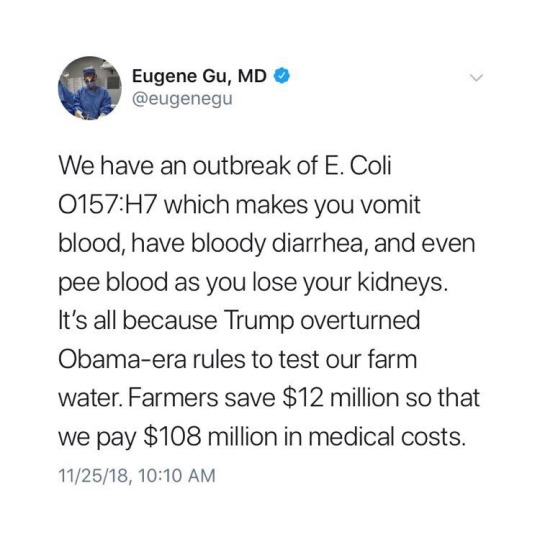
Deregulation will get you killed. Republican policies make your life worse.
Let’s be really clear that these aren’t farmers in the sense you normally think of. These aren’t oldish guys wearing overalls and women with weathered hands. These aren’t families with kids who come home from school and help with chores of day to day farm life.
These are corporations. Corporate Farms.
It’s known as Big Agribusiness. And it’s been destroying family farms for decades, consolidating ownership of the food supply, and forcing people off their homes and into tighter living spaces in the city.
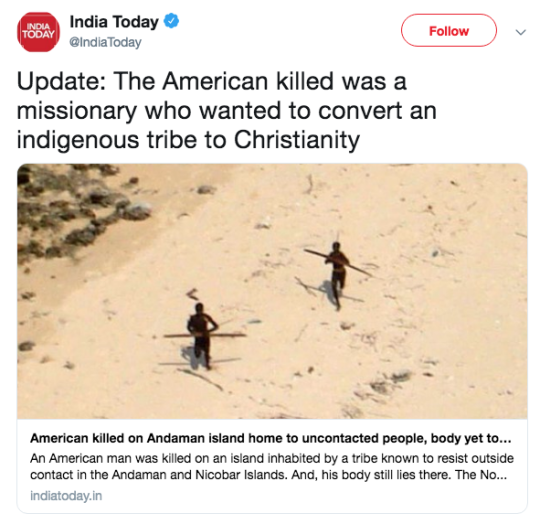
Missionary or not, if you go somewhere where it is widely known they don’t want visitors and it is literally illegal to contact them or go on their land, and you get clapped, that is your own fault.
Stop trying to colonize everyone and mind your business.
this man wasn’t a tourist — he was an intruder.
Left out of the headlines and first paragraphs:
He was killed on his THIRD visit.
The first time the locals shot arrows at the kayak he used to get from the fishing boat he hired to the shore. That dissuaded him for a day. Then he came back with a large fish as a gift. The locals accepted the fish and told him to leave. He whipped out his Bible and they shot up the Bible (as one of his missionary relatives described it to the BBC “The Bible saved his life!”). Still not taking the hint he returned the next day and, having had enough of his bullshit, they filled him with arrows.
What part of NO SOLICITORS did he not understand?
Also, they have no immunity to outside diseases. His presence could have literally wiped out the population of the entire island.
He knew it was illegal. The fishermen who took him knew it was illegal. The locals made it very, very clear that he was unwelcome. There were two days of warning shots, making it very clear his presence was not wanted. Still, this man put his own opinions above their wishes and their well-being.
Don’t forget this part either. While the 1924 Immigration Act essentially cut off Jewish immigration to the U.S., further action by officials enforcing anti-immigrant law was a huge issue in the 1930s too. Being a refugee did not save you from deportation.
And the same thing is happening today with all the refugees from the west and south Asian, and Central and South American countries we’ve either destablized or aided in the destabilization of. We can’t let ICE and their minions deport these immigrants to be killed.
men’s loyalty to violence is disturbing. when women want a life free of abuse, assault, threat, & coercion, men’s first suggestion is “learn to fight back. learn to defend yourself”. i don’t want my life to be a fight. i don’t want to “prove myself” through inflicting pain & fear.
i don’t find violence and physical conflict fulfilling or self-actualising.
Right now, I’m sifting through 50+ applications for a new entry-level position. Here’s some advice from the person who will actually be looking at your CV/resume and cover letter:
‘You must include a cover letter’ does not mean ‘write a single line about why you want this position’. If you can’t be bothered to write at least one actual paragraphs about why you want this job, I can’t be bothered to read your CV.
Don’t bother including a list of your interests if all you can think of is ‘socialising with friends’ and ‘listening to music’. Everyone likes those things. Unless you can explain why the stuff you do enriches you as a person and a candidate (e.g. playing an instrument or a sport shows dedication and discipline) then I honestly don’t care how you spend your time. I won’t be looking at your CV thinking ‘huh, they haven’t included their interests, they must have none’, I’m just looking for what you have included.
Even if you apply online, I can see the filename you used for your CV. Filenames that don’t include YOUR name are annoying. Filenames like ‘CV – media’ tell me that you’ve got several CVs you send off depending on the kind of job advertised and that you probably didn’t tailor it for this position. ‘[Full name] CV’ is best.
USE. A. PDF. All the meta information, including how long you worked on it, when you created it, times, etc, is right there in a Word doc. PDFs are far more professional looking and clean and mean that I can’t make any (unconscious or not) decisions about you based on information about the file.
I don’t care what the duties in your previous unrelated jobs were unless you can tell me why they’re useful to this job. If you worked in a shop, and you’re applying for an office job which involves talking to lots of people, don’t give me a list of stuff you did, write a sentence about how much you enjoyed working in a team to help everyone you interacted with and did your best to make them leave the shop with a smile. I want to know what makes you happy in a job, because I want you to be happy within the job I’m advertising.
Does the application pack say who you’ll be reporting to? Can you find their name on the company website? Address your application to them. It’s super easy and shows that you give enough of a shit to google something. 95% of people don’t do this.
Tell me who you are. Tell me what makes you want to get up in the morning and go to work and feel fulfilled. Tell me what you’re looking for, not just what you think I’m looking for.
I will skim your CV. If you have a bunch of bullet points, make every one of them count. Make the first one the best one. If it’s not interesting to you, it’s probably not interesting to me. I’m overworked and tired. Make my job easy.
“I work well in a team or individually” okay cool, you and everyone else. If the job means you’ll be part of a big team, talk about how much you love teamwork and how collaborating with people is the best way to solve problems. If the job requires lots of independence, talk about how you are great at taking direction and running with it, and how you have the confidence to follow your own ideas and seek out the insight of others when necessary. I am profoundly uninterested in cookie-cutter statements. I want to know how you actually work, not how a teacher once told you you should work.
For an entry-level role, tell me how you’re looking forward to growing and developing and learning as much as you can. I will hire genuine enthusiasm and drive over cherry-picked skills any day. You can teach someone to use Excel, but you can’t teach someone to give a shit. It makes a real difference.
This is my advice for small, independent orgs like charities, etc. We usually don’t go through agencies, and the person reading through the applications is usually the person who will manage you, so it helps if you can give them a real sense of who you are and how you’ll grab hold of that entry level position and give it all you’ve got. This stuff might not apply to big companies with actual HR departments – it’s up to you to figure out the culture and what they’re looking for and mirror it. Do they use buzzwords? Use the same buzzwords! Do they write in a friendly, informal way? Do the same! And remember, 95% of job hunting (beyond who you know and flat-out nepotism, ugh) is luck. If you keep getting rejected, it’s not because you suck. You might just need a different approach, or it might just take the right pair of eyes landing on your CV.
And if you get rejected, it’s worthwhile asking why. You’ve already been rejected, the worst has already happened, there’s really nothing bad that can come out of you asking them for some constructive feedback (politely, informally, “if it isn’t too much trouble”). Pretty much all of us have been hopeless jobseekers at one point or another. We know it’s shitty and hard and soul-crushing. Friendliness goes a long way. Even if it’s just one line like “your cover letter wasn’t inspiring" at least you know where to start.
And seriously, if you have any friends that do any kind of hiring or have any involvement with that side of things, ask them to look at your CV with a big red pen and brutal honesty. I do this all the time, and the most important thing I do is making it so their CV doesn’t read exactly like that of every other person who took the same ‘how-to-get-a-job’ class in school. If your CV has a paragraph that starts with something like ‘I am a highly motivated and punctual individual who–’ then oh my god I AM ALREADY ASLEEP.
Very good post thanks for this.
Excellent advice for building and submitting job application documents.
This is the first good resume advice post I’ve seen on this site. Much better advice than the “lists of active verbs to use” and “here are resume templates”. Follow this advice.
As a hiring manager, fuuuuck, man. This is fucking good advice. Also I do not give a shit if you won a writing competition in the sixth grade.







 Rebellions are built on hope