a lot of my friends have been noting that none of the “get out there and vote!” posts actually have any resources attached to them, so they’re great for motivation but if you don’t know how to vote they can really stress you out. so i compiled a list of resources that hopefully can help!
Here’s the most confusing bit! Figuring out who you’re voting for. Don’t know who’s running? Ballotpedia is a godsend. The page in the link looks very confusing, but all you have to do is click your state in each of the right-hand boxes. Those will take you to a page that will explain who from each party is running for the Senate and the House. Ballotpedia will also tell you if your state has same-day voter registration. If you’ve missed the cutoff to register, you might still be able to do it on election day, so check that on your state’s voting page!
Polling places can be crowded and the wait can be long to vote. Don’t freak out! Bring a book or some music/podcasts to listen to while you wait.
If you can’t make it on the day, you still have options! Find your state on this Ballotpedia page and click to learn more. The page it takes you to will have links and information on how to get an absentee ballot in your state. If you plan on absentee voting, hurry! The deadlines to apply and vote are usually sooner than the actual election day.
Most of all, remember: this election could swing the house and the senate, giving Democrats more control over new laws and legislation for years to come. You’re not a bad person if you can’t vote, but it’s a lot easier than you might think!
Hey there US friends! If you’re voting using these machines (Hart eSlate) or similar ones right now or in the near future, make sure that the machine has NOT changed your ballot before casting it, ‘k? It’s apparently an already known problem, and has been for years, but has never been fixed.
A terrifying New York Times article today announced that the Trump administration is considering “narrowly defining gender as a biological, immutable condition determined by genitalia at birth,” a measure that would essentially eliminate any and all recognition of transgender and nonbinary people and, therefore, their civil rights.
The memo from the Department of Health and Human Services claims officials need a clearer definition of gender. Their proposed definition “would define sex as either male or female, unchangeable, and determined by the genitals that a person is born with, according to a draft reviewed by The Times. Any dispute about one’s sex would have to be clarified using genetic testing.”
“Sex means a person’s status as male or female based on immutable biological traits identifiable by or before birth,” the department proposed in the memo, which was drafted and has been circulating since last spring. “The sex listed on a person’s birth certificate, as originally issued, shall constitute definitive proof of a person’s sex unless rebutted by reliable genetic evidence.”
The new definition would essentially eradicate federal recognition of the estimated 1.4 million Americans who have opted to recognize themselves — surgically or otherwise — as a gender other than the one they were born into.
“This takes a position that what the medical community understands about their patients — what people understand about themselves — is irrelevant because the government disagrees,” said Catherine E. Lhamon, who led the Education Department’s Office for Civil Rights in the Obama administration and helped write transgender guidance that is being undone.
Let me be perfectly clear: Being transgender is not something you can believe or not believe in, support or not support. It’s a reality. Trans people exist. Always have, always will. What this will do is make it infinitely *more* difficult than it already is to be trans in America. Violence, poverty, inaccessible healthcare, and a slew of other already-persistent problems will worsen. New generations of trans kids will be silenced in ways that date back decades, if not longer.
We cannot under any circumstances allow this to happen. Vote. Protest. Cis folks, donate to trans-led organizations and trans individuals’ GoFundMe pages for medical care. Talk to your transphobic (or trans-ignorant) friends and family about what a policy like this would mean. And if you’re trans and need support today, call the Trans Lifeline at 1-877-565-8860.
Trans friends: I see you and I love you. We will not let them erase you. We will fight this with you.
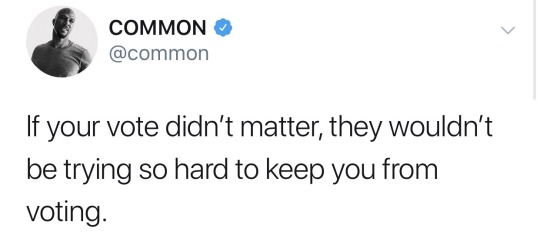
There’s a lot of young people who are going to be eligible to vote in America during this election so in light of the fact that this website is currently thrumming with political interest I’d just like to remind them that abstaining from voting is not useful or radical, it’s playing right into the hands of the people who want this country to progress backwards. I can guarantee you that there will be an ENORMOUS conservative turn out and if the younger generation doesn’t match it it will literally be a disaster
The more young adults don’t bother to show up, the more significant the consequences.
This is, of course, a dream scenario for Republicans: since young voters tend to be the most progressive, their passivity and indifference towards the elections will give far-right candidates a boost.
It also sends a powerful signal to candidates – now and in the coming years – that they shouldn’t bother targeting young voters or emphasizing issues of importance to Americans under 30 since most of these voters won’t bother to cast a ballot. Campaigns have limited time and resources, which means they have to prioritize outreach to those most likely to cast a ballot.
If young voters ignore the political process, officials and candidates will ignore young voters.
But the policy effects are among the most striking. If young and old voters turned out in equal numbers, politicians would have no choice but to respond accordingly – and we’d almost certainly see issues like student-debt reforms rise to the top of the priority list.
Except, that’s not happening because most young voters don’t care. There’s a reason benefits for seniors are sacrosanct, and benefits for young adults are an afterthought.
If voters under 30 find this frustrating, they’re going to have to get off the sidelines for a change.
“a recent report from Gallup, which found 82% of voters over the age of 65 saying they’re certain to vote in this year’s midterms. For voters under 30, it was 26%.”


 Rebellions are built on hope